By Jimmy Siyasa
First, a Uganda Christian University (UCU) research team led by Dr. Geoffrey Ssepuya went to the laboratory to seek answers to a growing challenge of food waste in the communities. Their solutions-based research came up with answers after a study which sought to turn food waste into feed for crickets.
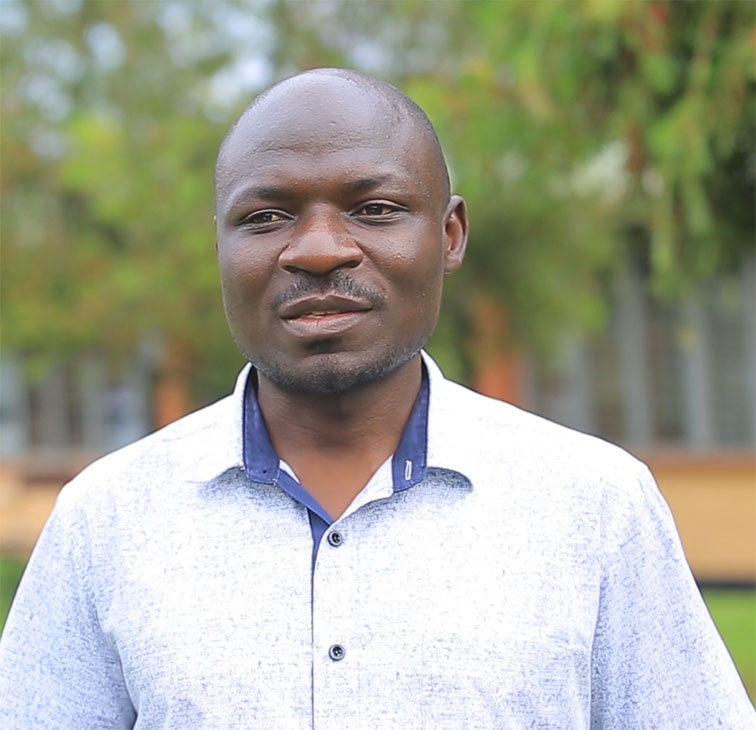
Dr. Geoffrey Ssepuya, the project’s Principal Investigator
The study, conducted in Kampala city more than two years ago, with the majority of the respondents being generators of waste, established that a daily production of 768 metric tons of food waste is generated in Kampala. The majority of the respondents disposed of food waste through dumping, with only a few considering alternative uses.
Over 90% of the respondents recognized food waste as both a challenge and a resource, especially for use in producing feeds for livestock. They were also willing to consume crickets raised on feeds made from food waste.
But that was then. Unlike some researchers, Ssepuya, a Senior Lecturer at UCU’s Department of Food Science and Nutrition in the Faculty of Agricultural Sciences and colleagues did not stop at just making recommendations. They actualized them.
They registered a company, Bio-Novedosa, which provides innovative, sustainable solutions for managing food and agro-industrial waste, turning it into safe, high-value products that empower communities and protect the environment.
In partnership with UCU, Bio-Novedosa, based in Gayaza near Kampala, turns mostly raw and cooked kitchen waste such as banana peels into nutritious, low-cost feeds for crickets, not only solving a waste problem, but also contributing to high-protein food supplementation.
By converting food waste into animal feed, the project reduces organic waste in landfills, lowers greenhouse gas emissions and mitigates health risks.
Ssepuya, the Principal Investigator, said: “We had to come up with a system to collect food waste from the population, majorly from households, food centers and markets; then transport the waste to a processing facility, now not in a laboratory, but under a real industrial environment.”
This system marks the end of lab-based experimentation, and the beginning of market-based expansion, opening doors for employment for many.
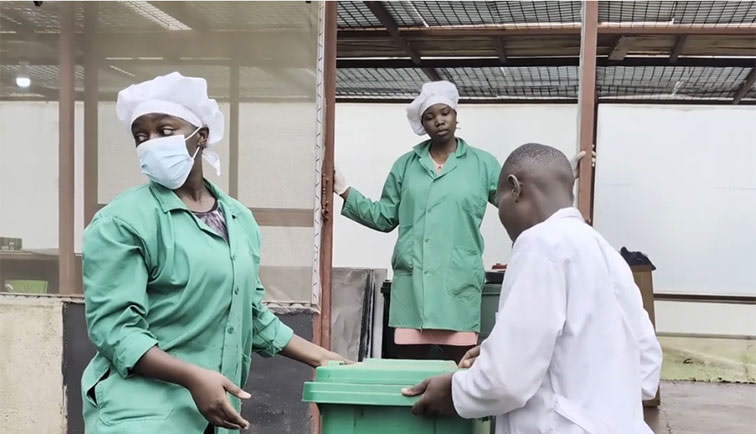
Within two months, over 40 households had started to supply the waste raw material needed. The plant employs seven young men and women, four of whom are full-time employees, led by Fabian Tenda, who serves as the Operations Manager.
Tenda says they provide waste collection containers to restaurants and households that supply them with mainly raw and cooked food waste at no cost. The collected waste is transported using eco-conscious logistics to the processing facility. The waste is transformed through innovative bio-processing. The products out of this process include livestock/aquaculture feed, fortified food ingredients and sustainable industrial inputs.
“This initiative has helped us have a healthier environment because we collect the waste in one place and it’s taken away. We have taught our children to sort the trash as well,” says Justine Kyasimire, one of the waste suppliers.
Sulaifah Nanango, one of the female workers at the firm, is glad to be employed by this project. “The money I earn from this job enables me to look after myself and some of my family members,” she says without revealing her wages.
Bushira Nakiranda, another female employee, encourages young women to be open-minded toward even apparently male-dominated work fields. “I urge fellow women to not shun a job because it’s mostly men doing them,” she said.
Ssepuya is only too glad to have turned a scientific project into an employment prospect for young people, curbing a critical societal crisis. “At first we thought dirt would be a challenge, but now the process is hygienic and the youth have no problem working here.”
For the time the plant has been in existence, it says it has promoted sorted-waste collection among communities, championed the establishment of hygienic communities, transformed organic waste from over 20 food service establishments, saved one ton of organic waste from landfills, created green jobs and reduced carbon dioxide in the atmosphere.
+++++++++++++++++++++++++++
To support UCU programs, students, activities and services, go to www.ugandapartners.org and click on the “donate” button, or contact UCU Partners Executive Director, Mark Bartels, at m.t.bartels@ugandapartners.org.
Also, follow us on X (formerly Twitter), Instagram and Facebook.
Discover more from Uganda Partners
Subscribe to get the latest posts sent to your email.