
By Michael Ainomugisha
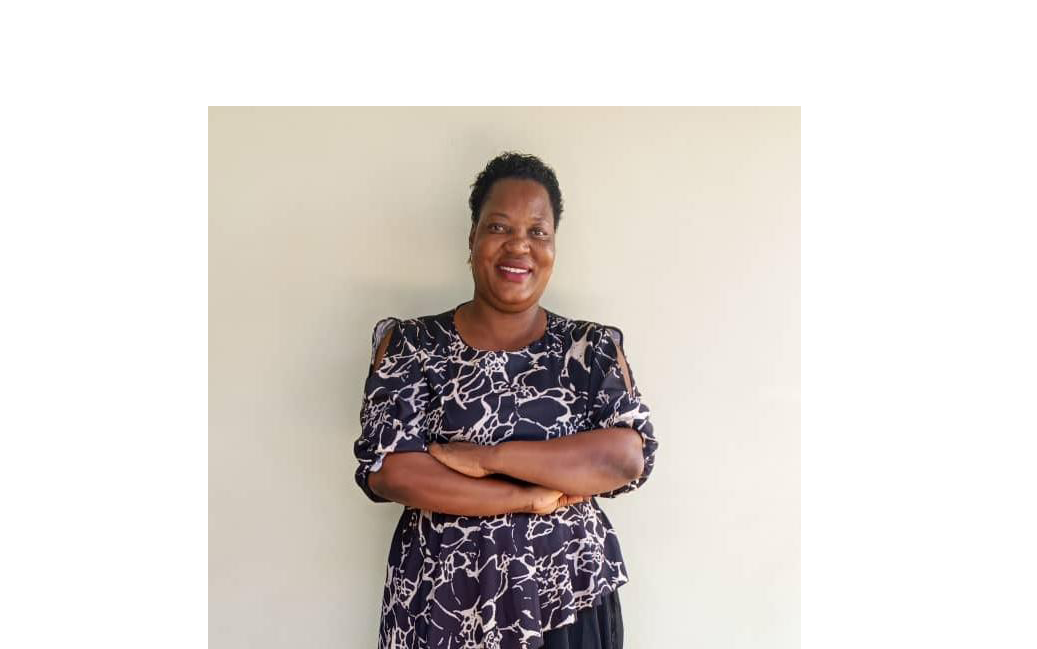
In June 2023, Patience Kwizera Mpamizo stood before the United Nations Human Rights Committee in Geneva, Switzerland, as she presented a paper on the status of human rights in Uganda. A few months later, in October, she was in Arusha, Tanzania, contributing to discussions at the 77th Ordinary Session of the African Commission on Human and People’s Rights.
These moments were not sudden breakthroughs for Kwizera. They are a result of a journey that began years earlier in Kabale, southwestern Uganda. Growing up in an extended family, she learned early that responsibility was not optional. As the first-born child, there were high expectations on her.
“I was raised in an environment where hard work was expected, where respect mattered, and where you were taught to leave every space better than you found it,” she recalls.
Such virtues later guided her academic and professional choices. In 2006, she enrolled at Uganda Christian University (UCU) to pursue a Bachelor of Laws, graduating in 2009. Her experience at UCU, she says, extended far beyond the lecture rooms.
In 2007, she served as Deputy Guild Speaker, a role that introduced her to the discipline of leadership. That same year, she made history as the first female candidate in the race for the UCU Guild President.
“Leadership is far deeper than visibility. It is about responsibility, listening and the ability to carry the concerns of others with the seriousness they deserve ,” says Kwizera.
Her time at UCU also shaped how she understood law, not just as a career path but as a tool for justice and service.
“I wanted an education that would train my mind and also shape my character. UCU helped me see that law is both a profession and a platform for stewardship,” she says.
After graduating in 2009, Kwizera began her legal career the following year as a legal trainee at Uganda’s Ministry of Justice and Constitutional Affairs. She was involved in legislative drafting, legal research and advisory work, an experience that introduced her to the inner workings of public institutions.
From 2013 to 2014, she worked with the Centre for Constitutional Governance as an executive legal assistant, expanding her role into civic education, program implementation and governance advocacy. With the role, she was able to understand the broader issues about public accountability.
Her career continued to evolve. From 2015 to 2017 Kwizera was employed at the Uganda Consortium on Corporate Accountability, where she engaged in policy research, advocacy and organizational strategy. From here, she moved to another non-governmental organization – CivSource Africa – where she worked on governance programming, grant oversight and partner engagement until 2019.
During this period, she also pursued further academic training, earning a master’s degree in Peace and Conflict Studies from Makerere University. She later completed a postgraduate diploma in legal practice at the Law Development Centre between 2020 and 2022. To practice law in Uganda as an advocate, every lawyer is mandated to undertake this postgraduate diploma in legal practice.
As expected, there were challenges that came with the responsibilities. “Working in spaces where law, politics and public interest intersect is not easy. You have to remain intellectually rigorous, emotionally steady, and ethically clear,” she says.
In 2021, she joined Uganda’s Ministry of Foreign Affairs as a Legal Associate, where she contributed to Uganda’s participation in international processes, including the Universal Periodic Review of the United Nations Human Rights Council.
By 2022, Kwizera had taken up a new role as the Networking and Partnerships Manager at the National Coalition of Human Rights Defenders Uganda. This position places her at the center of policy engagement, advocacy and international collaboration.
“In my current role, leadership means responsibility, building trust and helping institutions pursue their vision,” she added.
Kwizera’s academic and research work reflects commitment to justice and human dignity with publications on issues such as child trafficking in post-conflict Uganda, environmental crimes in the oil and gas sector and peacebuilding mechanisms in South Sudan.
She hopes her work is able to contribute to stronger institutions and more accountable systems while also inspiring others.
“I hope to contribute to a society where justice is not selective and where institutions work for people,” she says. “If my journey can help open doors for others, then I would value that impact the most.”
++++++++++++++++++++++++++++++++++++++++++++++++++++++++++++++++++++
To support UCU programs, students, activities and services, go to www.ugandapartners.org and click on the “donate” button, or contact UCU Partners Executive Director, Mark Bartels, at m.t.bartels@ugandapartners.org.
Also, follow us on X (formerly Twitter), Instagram and Facebook.
Discover more from Uganda Partners
Subscribe to get the latest posts sent to your email.