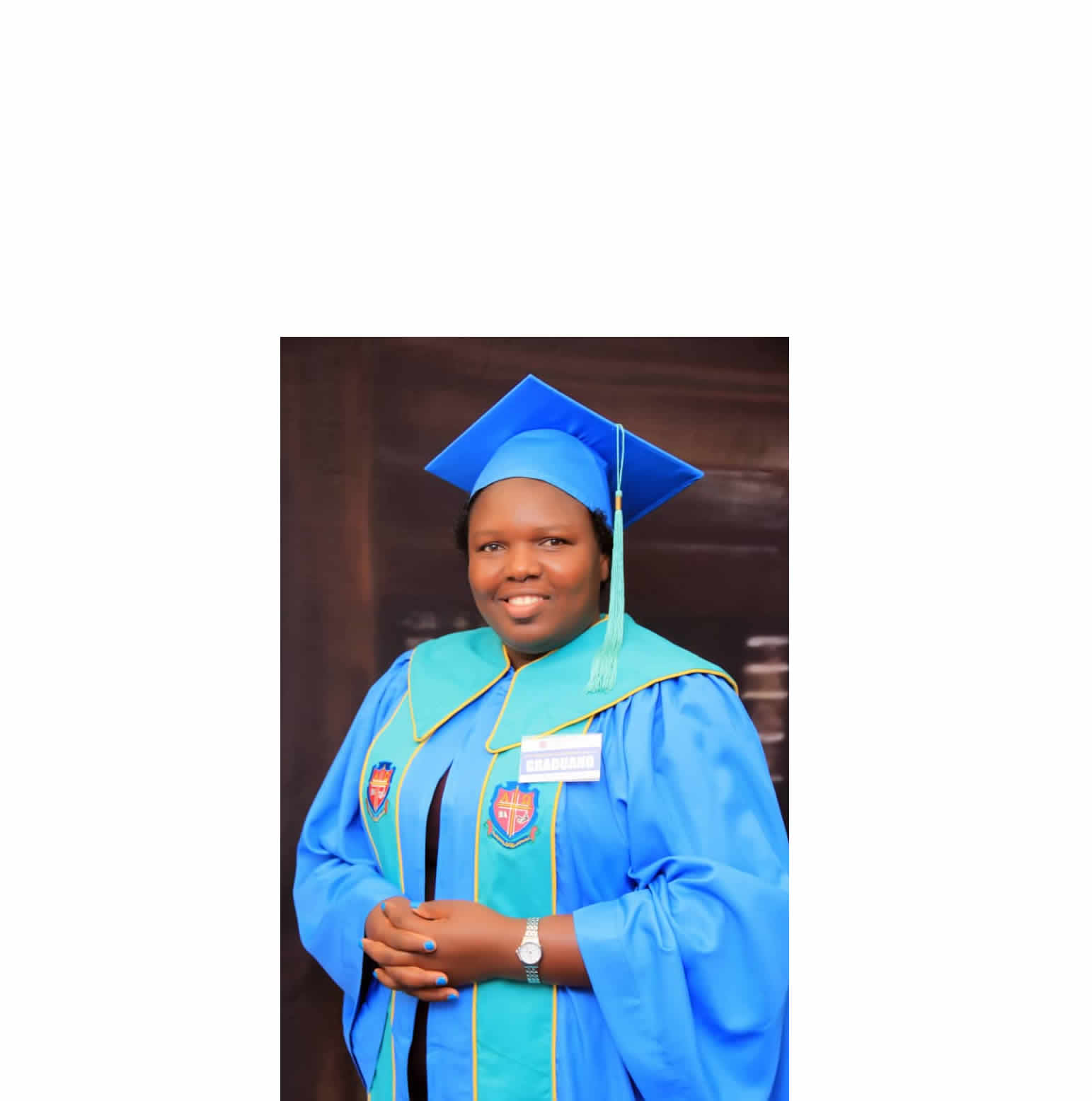
By Michael Ainomugisha
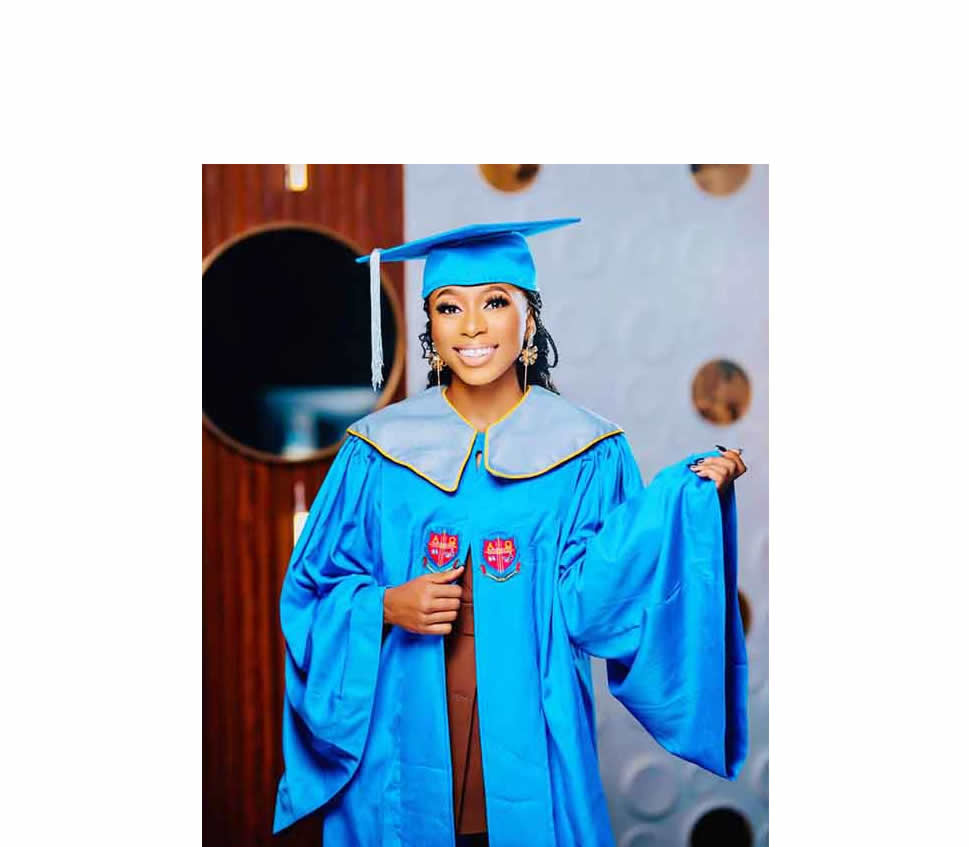
Adrine Naturinda had already chosen her profession before she fully understood what it meant.
While in Senior Six, she wanted to become a counselor. The decision was clear, even if the profession was still unfamiliar.
“I always wanted to become a counselor. Though I didn’t know what counseling was all about,” she recalls.
Her father had another idea. He wanted her to become a teacher. But during her Senior Six vacation, Naturinda traveled to Kampala for the first time. While visiting her uncle, she met a cousin who was studying at Uganda Christian University (UCU), who encouraged her to pick up an application form.
She did.
Guidance and counseling was her first choice, and when UCU admitted her, she did not spend time comparing other universities.
“For me, my first choice was guidance and counseling. So, when I tried UCU and they gave me, I didn’t look here and there,” she says.
In 2010, she joined UCU’s Kampala Campus to study for a Bachelor’s in Guidance and Counseling, graduating in 2014. The class was small, beginning with about 16 students and eventually graduating 11.
She arrived at university carrying questions she could not necessarily name. She initially imagined university as a place where the main objective was simply to avoid retakes.
“At first, I thought that when you join the university, it’s all about not getting a retake. Later, I realized, oh, they also have grades. So, that means we also have to concentrate,” she says.
But something more significant was happening alongside the academic adjustment. Studying counseling was slowly turning her attention inward.
One of the lessons that stayed with her was: before helping other people deal with their problems, she first had to examine herself.
“When I started counseling, they told us that before you deal with other people, you should first deal with yourself,” she says.
The lesson forced her to look at her own upbringing and emotional experiences. As a first-born child, she began thinking more deeply about the pressures children carry, particularly within African families where expressing difficult emotions is not always encouraged.
She began to recognize things in herself that she had previously struggled to name.
“I found that I grew up with some depression. I had low self-esteem. I realized that somehow, somewhere, my life was not so good. It was not good at all,” she says.
She also began examining the parenting patterns she had grown up with.
“At home, I saw the parenting skills that my parents were using on us, and I was like, for sure, something has to be done.”
Counseling, therefore, became part of her own process of understanding herself.
That realization was one of the reasons she returned to UCU in 2016 for a Master of Arts in Counseling Psychology.
She returned with ambitions that extended beyond healing. She had drawn up a timetable for her life: a master’s degree by 30, a family, and a PhD by 35.
“I was someone who had set goals, and I wanted to achieve those goals,” she says. “By 30, I should have received my master’s degree.”
The plan, however, would soon collide with realities she could not schedule.
Her first module went well. She was the youngest in her class, surrounded by lecturers she already knew from her undergraduate studies. Then, during the second module, she became pregnant.
“That’s when things started changing,” she says.
Her academic journey became intertwined with motherhood, uncertainty, and later illness. During her master’s studies, she developed a condition that caused fluid to accumulate in her stomach. The physical problem came with another burden: anxiety about her health, hospital bills, and whether she would be able to complete her studies.
Yet she says UCU remained present beyond the classroom.
“Integrating faith with whatever we do there, teaching me how to pray, and having a good relationship with God,” she says, remain one of the things she values most about her education.
She also remembers the emotional and spiritual support she received from the counseling department.
“However many things were happening, the counseling department of UCU was always there and would help in whatever issues I was going through.”
Her memories of UCU’s care go back to her undergraduate years. On one occasion, she was struggling to complete registration because she was short of sh50,000. One of her lecturers lent her the money.
“You can imagine a lecturer helping a student with money. Isn’t that good?” Naturinda asks rhetorically.
For her, such moments shaped what UCU meant beyond lectures and examinations.
“I felt at home,” she says.
That sense of being cared for became even more significant when her master’s journey stretched far beyond the timeline she had originally imagined.
She started the program in 2016 but completed it in 2026.
At one point, when she was almost giving up, particularly during the research stage, financial support came through a scholarship or grant of sh3.93 million, helping her clear her tuition and finally complete the program.
The ten-year gap between beginning and finishing did not erase the goal she had once set for herself. Instead, it changed her understanding of how goals work.
“Life is not always a straight line. There is nothing like a perfect person or a perfect institution, but the main thing is, how will you go through that?” Naturinda asks.
Today, she is a lecturer at Team University. Her experience as a UCU student has followed her into the classroom, particularly in how she understands the people sitting before her.
She says one of the biggest lessons she carried from UCU was care.
“Not looking at students as the sources of income, but as part of the family,” she says.
For Naturinda, that distinction matters. A student may arrive in class carrying financial pressure, family challenges, emotional struggles, or uncertainty that cannot be seen from an attendance register.
“At UCU, they don’t treat students as just students. They get involved so much in a student’s life,” she says.
That is the kind of lecturer she now wants to be.
Her own experience has also strengthened her desire to go further in counseling. She hopes to pursue a PhD in counseling and psychology and, if resources allow, establish a way of offering counseling services to people of different ages.
“I would like to go for a PhD in counseling and psychology studies. I would like to always offer counseling to people, both the young and the old,” she says.
Faith, she says, will remain part of that work.
“Even though we go to school and study, we still need that part of having God within us and always letting Him take a role in every profession that we are in,” she adds.
++++++++++++++++++++++++++++++++++++++++++++++++++++++
To support Uganda Christian University programs, students, activities, and services, go to www.ugandapartners.org and click on the “donate” button, or contact UCU Partners Executive Director, Mark Bartels, at m.t.bartels@ugandapartners.org.
Discover more from Uganda Partners
Subscribe to get the latest posts sent to your email.