By Patty Huston-Holm
Alice Jossy Kyobutungi Tumwesigye, principal, Bishop Barham University College (BBUC), was the first to arrive for an online meeting. It was 2 p.m. East Africa Time on a Friday in October. Before the Zoom call, she had exercised with a brisk walk 10 times around her Mbarara home where she was on sabbatical – two hours away from her daily duties at Bishop Barham in Uganda’s southwestern city of Kabale.
“I’ve been using this time to think,” she said.
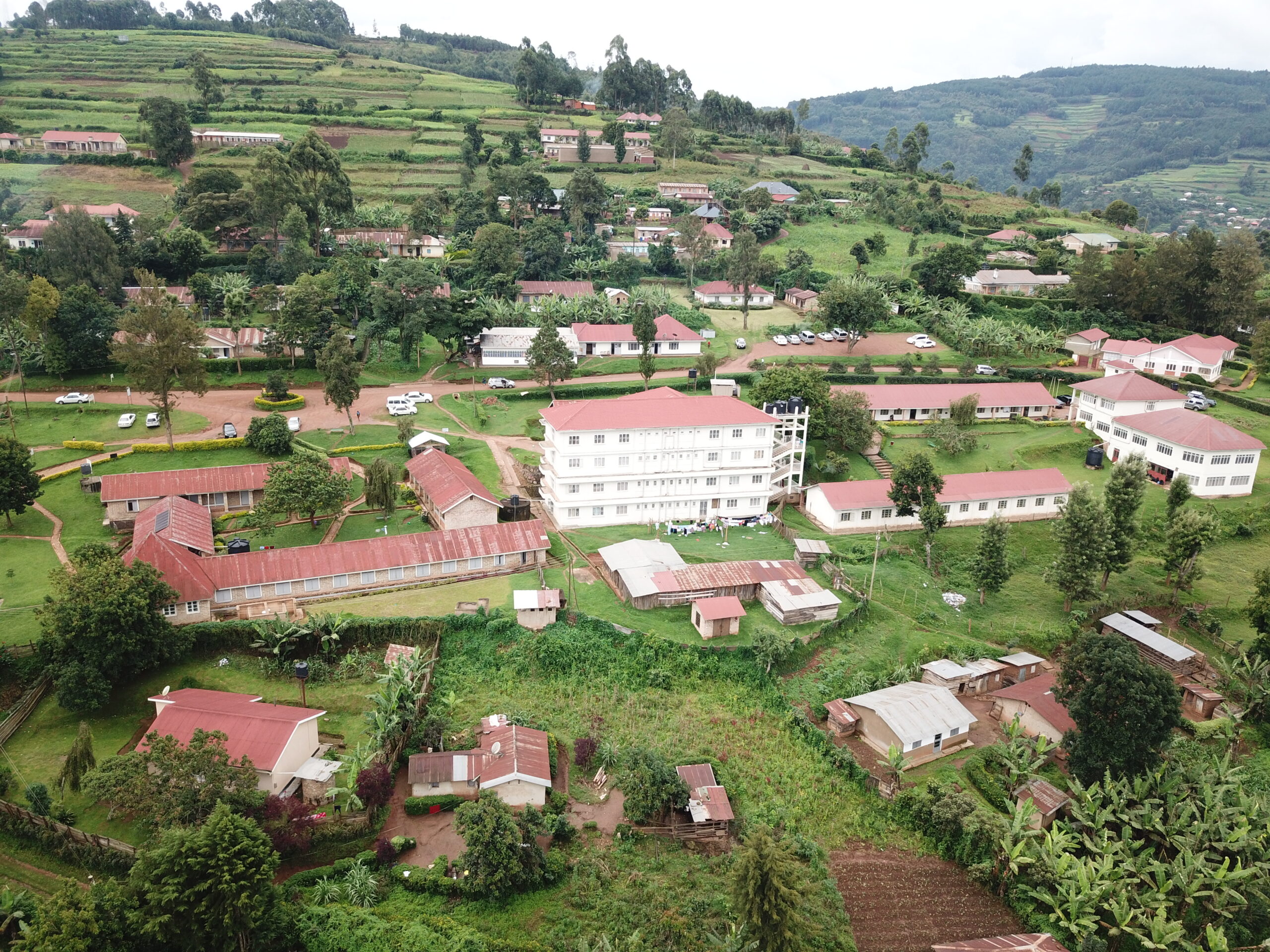
This aerial view of Bishop Barham University College in Kabale, Uganda, depicts some of the beauty of the hillside location.
Kyobutungi Tumwesigye shared that her thoughts were about getting an associate professorship through Uganda Christian University (UCU) and how she might use her leadership to improve BBUC.
Over the next 20 minutes and on computers in two different rooms at Bishop Barham, another seven participants left half-eaten lunches and other tasks to join the conversation with Kyobutungi Tumwesigye. The purpose of the 90-minute assemblage was to capture some of what these staff members loved and what they didn’t about BBUC – with a focus on a better future.
In addition to Kyobutungi Tumwesigye, others engaged virtually on Oct. 10 were Dr. Habaasa Ivan Akatwijuka, college secretary; Rev. Agaba Moses, chaplain; Justine Tushemereirwe, senior accountant; Rev. Agaba Robertson, dean of students; Joy Asiimwe, academic deputy registrar; Rev. Alex Arinaitwe Kifaru, lecturer and head of the Department of Divinity and Theology; and Rev. Richard Menees, serving the area as an affiliate of the Society of Anglican Missionaries and Senders (SAMS).
None are fundraisers per se. But they are seeking contributions to improve BBUC, one of three and the first of UCU constituent colleges and one of six UCU program locations.
After Rev. Moses’ opening prayer with a call to realize “God’s greater purpose,” the eight BBUC affiliates shared their perspectives on pluses and needs, loosely using the SWOT (Strengths, Weaknesses, Opportunities, Threats) analysis.
“Our campus is on a hill overlooking the busy city center,” Akatwijuka began. “It’s a beautiful location.”
Bishop Barham, named after a British theologian, started in 1924 as a training site for teachers and the clergy. In 2000, it became a UCU constituent college, following the university’s syllabus, examinations and other principles and guidelines. Like the other five UCU sites, Bishop Barham is under the Church of Uganda.
The 1,200 Bishop Barham students are part of the nearly 249,000 Kabale District residents that are predominantly Bakiga tribe, speaking the Rukiga mother tongue. Like all UCU students from Rwanda, South Sudan and other countries, students and staff speak Uganda’s official language of English.
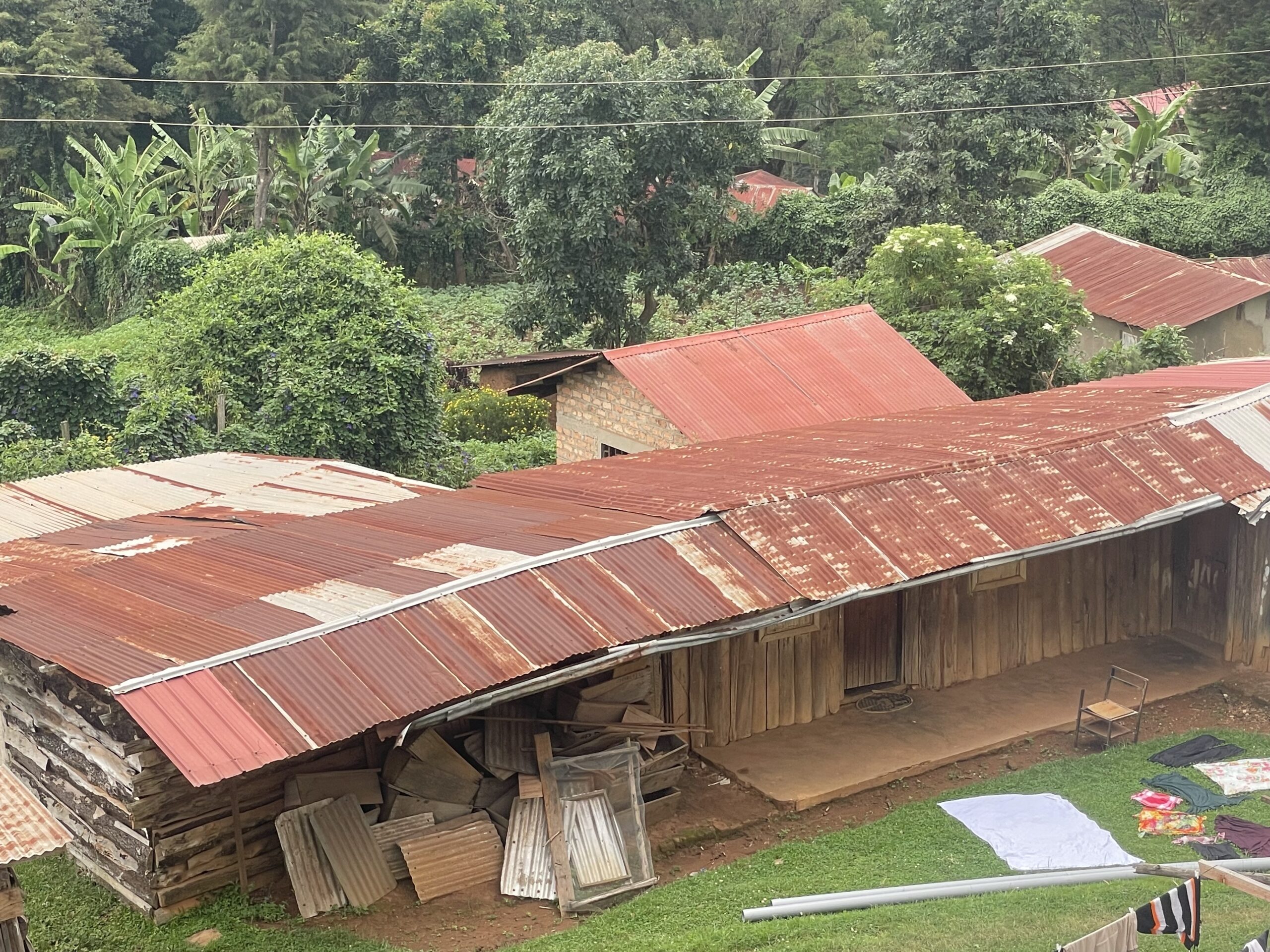
One closer look at BBUC finds this crumbling building behind the BBUC theology hostel. It is used to store stationery, mattress, books, tools and theologian bicycles and other valuables.
Because of program semester breaks, most days find 900 students studying on campus or through e-learning within the BBUC six departments/ faculties: Theology and Divinity, Education, Social Sciences, Business and Administration, Journalism and Media Studies and Information and Communication Technology.
BBUC has many strengths. Among them are holistic education, faith integration in all disciplines, blended (physical and online) learning, diverse student body, a strong Christian brand and identity and a positive reputation within the community. Many students are engaged in small businesses, such as selling g-nuts, pumpkin seeds, homemade soap and used clothing, and washing cars.
“All students are involved in hands-on learning,” said Rev. Kifaru. “Local employers want to hire our students.”
Akatwijuka noted two more strengths: 1) the elevated academic status of staff with 98 percent holding master’s degrees or higher; and 2) a supportive church diocese.
As with all six UCU sites, BBUC reinforces the Rule of Faith (…love God) and Rule of Life (…love neighbors). The two documents combined have 18 guidelines defining beliefs and behavior expectations.
On this particular Friday afternoon as with most Ugandan universities, many lecturers and students had left for the weekend.
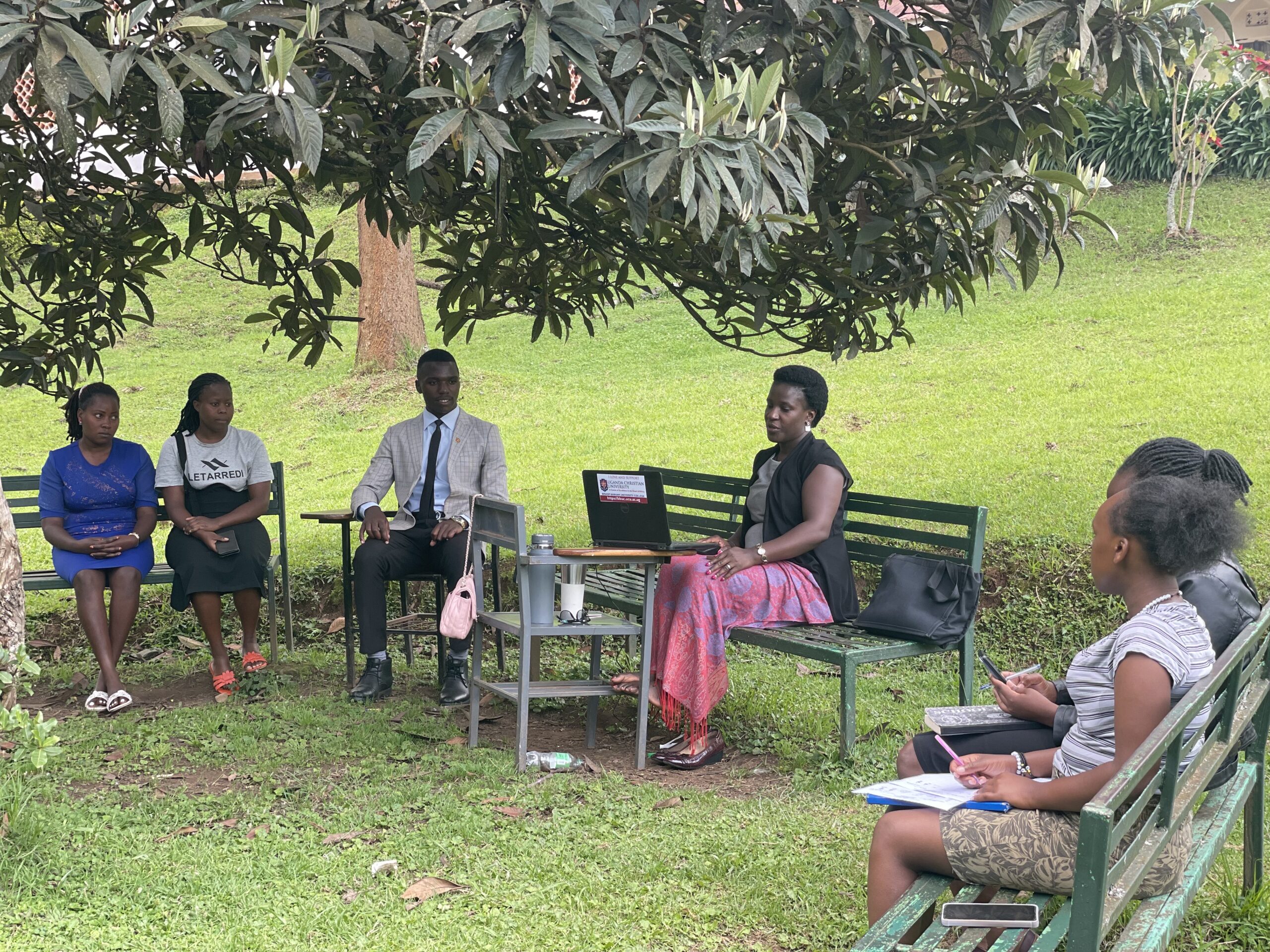
When BBUC is filled with students, classroom space is sparse, according to the Zoom participants. Movement of chairs and equipment to multi-purpose buildings and rooms is commonplace. Often, classes are forced outside with little-to-no-covering. These practices inconvenience and psychologically affect students and faculty.
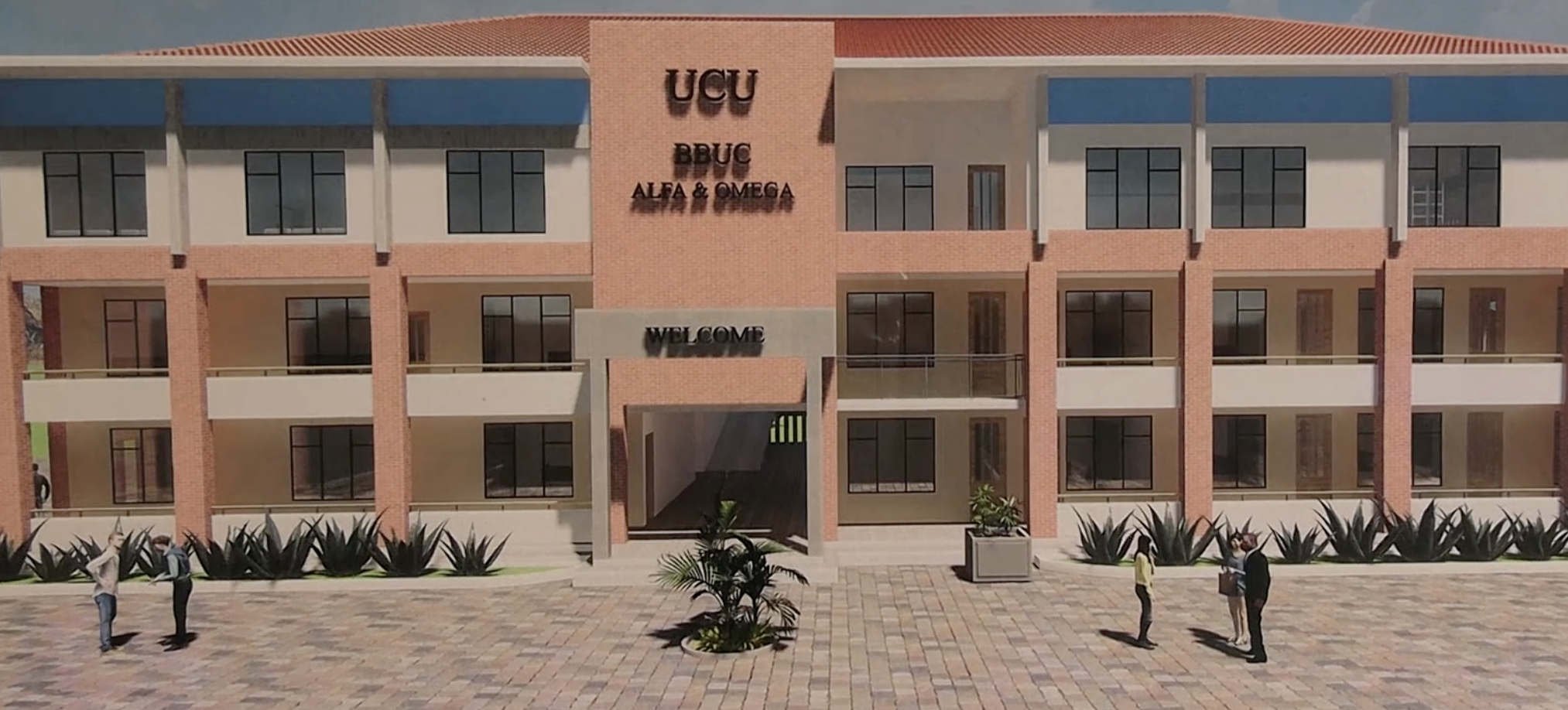
Blueprint of a proposed three-story building
“We get up to 500 inches of rain a year here,” said Rev. Menees, who is posted in Kabale by Bishop Eric Meenes and the Diocese of San Joaquin (ACNA), which is the current partner diocese of the Diocese of Kigezi. “An under-the-tree classroom might seem appealing, but there is no blackboard or computer screen. And a tree won’t stop the rain.”
Inclement weather may delay or totally cancel classes. At that, the buildings themselves are nearly the same as when BBUC started more than 100 years ago. Crumbling hostels for some of the 132 divinity and theology students is one example of age.
Rev. Agaba recently delivered a campus message reinforcing the importance of spirituality over materialism. He used 1 Timothy 6:6 (“godliness with contentment”) as a reminder to be satisfied with what God has given.
However, during this Friday meeting, he pointed out two BBUC structural flaws.
“Our chapel has a deep crack,” he said. “The center of excellence that we aspire to be is lacking with the roof at one point falling when I was delivering a sermon.”
Among BBUC weaknesses that threaten delivery of a quality education are students unable to afford tuition, infrastructure limitations, lack of books and computers, Internet cost and accessibility and staff retention. For theology students, there is not only tuition but also inadequate on-campus lodging and transport costs (often boda-bodas/motorcycles) for their weekly field engagements.
“We have a challenge with staff exits,” Kyobutungi Tumwesigye said. “Our pay is not as good, so they leave for greener pastures.”
According to Tushemereirwe, the lowest paid staff is sh380,000 ($105) a month with the highest at sh1.8 million ($496) monthly – all about one-third of what other East African university faculty get.
Several of the Zoom participants talked about the lack of books and a library. BBUC uses the old cathedral building of St. Rugarama, belonging to the Diocese of Kigezi, as a repository for books.
“It’s a 30-minute, round-trip walk,” Akatwijuka said. “It’s not only inconvenient but can be a security issue as the journey is outside campus gates.”
The group shared a two-minute video that includes a blueprint of a new building with an estimated price tag of just over sh2.4 billion ($691,000).
“Our outside support, including from churches, has diminished,” Akatwijuka said. “We want to get the word out about our needs.”
The eight voices echoed hope that the message reaches the right ears. They are committed to prayer in that regard.
“Prayer can move mountains,” Rev. Moses said.
++++
To support UCU programs, students, activities and services, go to www.ugandapartners.org and click on the “donate” button, or contact UCU Partners Executive Director, Mark Bartels, at m.t.bartels@ugandapartners.org.
Also, follow us on X (formerly Twitter), Instagram and Facebook.
Discover more from Uganda Partners
Subscribe to get the latest posts sent to your email.