By Elton Mwidu
Illness sometimes has a way of shaping a calling before a person chooses one.
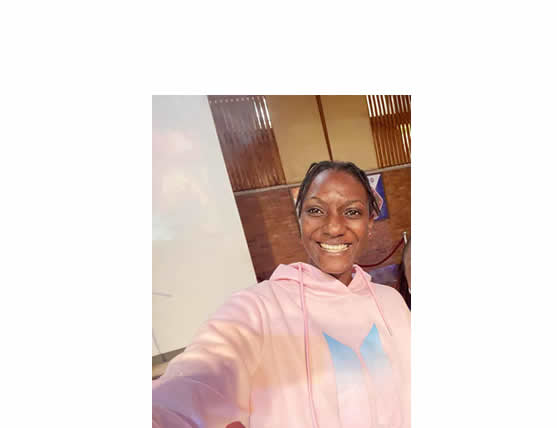
Long before Okeke Dorcas Chizaram entered a lecture room to study medicine, she had already spent time watching doctors work – not as a visitor, but as a patient.
“I was a frequent face at the sick bay,” Chizaram recalled of her secondary school years in Nigeria.
While at Holy Innocents Juniorate Convent in Anambra State, Nigeria, malaria sent her to the sick bay so many times that nurses knew her by name. Her parents sometimes picked her up from school three times in a term. On several occasions, she was admitted to the hospital, where she did some of her examinations in the midst of chills and high fever.
“It was a very significant challenge for me,” she said of a youth punctuated with battles against the mosquito-borne disease.
But, those hospital stays were planting an idea the pre-teen and teenager wouldn’t recognize until years later. She watched doctors walk in, ask questions and somehow know what was wrong with her.
“I was like, okay, I want to be able to do that one day,” she recalled.
Her interest in medicine also was influenced by her family. Her elder sister, Dr. Gloria Ozioma Okeke, had studied medicine before her. That sibling encouraged her by showing that it was possible.
An Igbo by tribe, Chizaram comes from Nigeria’s southeastern Imo State. She was born into a Christian family, with her father, Henry Okeke, serving as an Anglican Bishop of Ideato Diocese. As with many pastors, work took him to diverse places with family at his side.
The family’s movement to different communities exposed them to new languages and culture.
After moving from northern Nigeria, where Chizaram spoke only English, to eastern Nigeria, she initially struggled with the local language (Igbo). With time, she learned it, and made friends.
Chizaram was attracted to Uganda Christian University (UCU) because of its Christ-centered focus, and it was where some older siblings studied. Her brother, Shalom Chimkwesiri Okeke, is a graduate of UCU’s School of Law and has a master’s degree in law.
But studies didn’t come easy for Chizaram. One initial obstacle was how lecturers pronounced English. During the bridge course required of international students before joining any UCU program, she found a lecturer’s accent so different that she questioned whether the words were in English. She raised her hand and asked politely whether the class could be held in English.
“I am speaking English,” the lecturer said. The room burst into laughter.
Okeke’s early UCU struggles – namely the initial adjustment to language and a mid-course curriculum change that required her to repeat content and study seven years instead of the usual five – tested her deeply.
At one point, she went home discouraged, wondering if she would graduate and called her brother in tears. Shalom encouraged her to give herself time to adjust, and she did.
Faith stayed central throughout, as she joined the UCU School of Medicine worship team, singing and playing the piano and drums she loved since childhood. The team became her home, most especially during worship nights. She found fellowship within a close circle of friends she believes God chose for her.
Seven years after that confusing first lecture, and with her parents in the audience, Chizaram graduated.
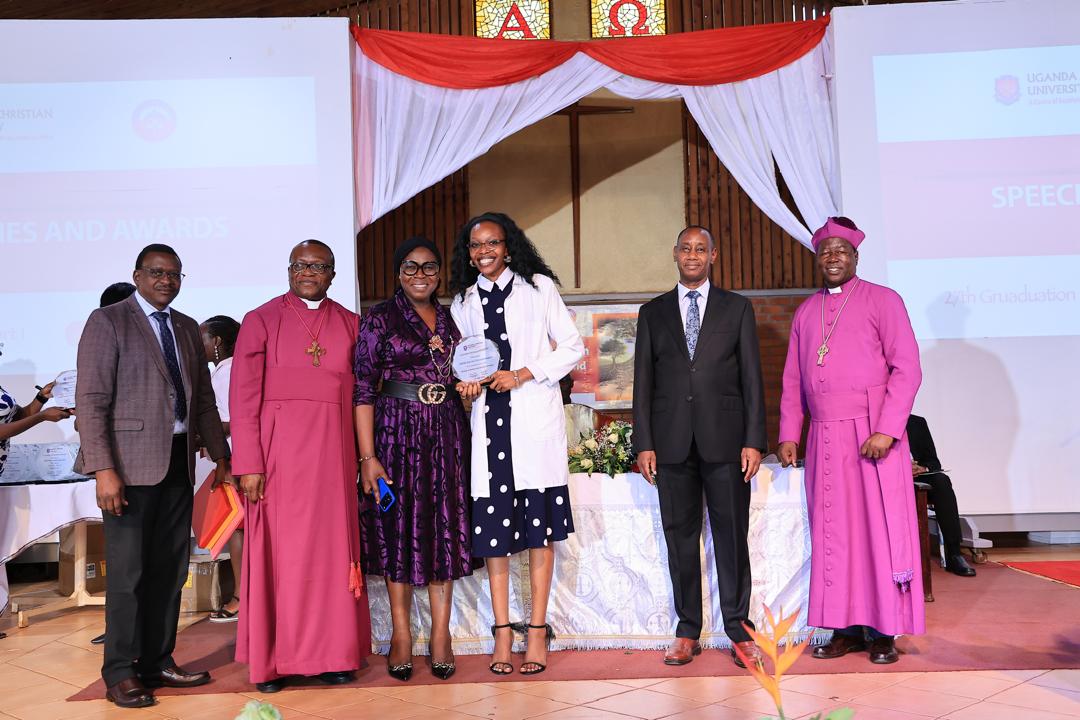
For her, that moment in July 2026 felt surreal. She knew she had performed well academically, but she did not expect to graduate as the best student with a Bachelor of Medicine and Surgery from the UCU School of Medicine. She only learned about the recognition that she owes “entirely to God” a few hours before the commissioning service.
At that, Chizaram found herself thinking less about the ceremony and more about what it took to get to that stage – illness, adjustment, doubt, friendships, faith and hard work – and what was yet to come.
One current and future aspect of all careers is Artificial Intelligence (AI) that she embraces.
“To so many people, the use of AI is quite controversial,” she says. “But from my point of view, we are in a generation where AI has come and it is here to stay.”
She points to a friend’s work as part of why she’s optimistic about AI’s role in healthcare. Malae Tech is an African health-technology company that builds AI-powered software designed to act as an intelligent clinical companion for medical professionals. Founded by Ugandan doctor Samantha Ainembabazi, it aims to solve the documentation crisis faced by healthcare workers across Africa, where administrative workload can take up to 60% of a doctor’s day.
In September, Chizaram was preparing for her medical licensing examination scheduled for October 2026 in Nigeria. She hoped to begin her internship after completing the examination and later pursue further training, hopefully a master’s degree specializing in aviation medicine.
This recent UCU alum knows that infectious diseases, malnutrition and chronic illnesses are the main health concerns in East Africa. Chizaram wants to use medicine to provide solutions to people facing these health challenges and more.
++++
To support UCU programs, students, activities and services, go to www.ugandapartners.org and click on the “donate” button, or contact UCU Partners Executive Director, Mark Bartels, at m.t.bartels@ugandapartners.org.
Also, follow us on X (formerly Twitter), Instagram and Facebook.
Discover more from Uganda Partners
Subscribe to get the latest posts sent to your email.