By Patty Huston-Holm
On paper, Uganda Christian University (UCU) third-year student, Favour Maombi Vera, appears successful with academic marks, travels within the African continent and is purposeful about where she wants to go in life.
Her Grade-Point Average (GPA) since enrolling in the UCU School of Journalism, Media and Communication (JMC) in 2024 has reached a high of 4.75 of 5.0 and never dipped below 4.42. From the time of her birth in Kenya 24 years ago, she has twice traveled back there, she has twice lived in the Democratic Republic of Congo (DRC) and has resided in four houses in three locations (Cape Town, Bellville, Delft) in South Africa.
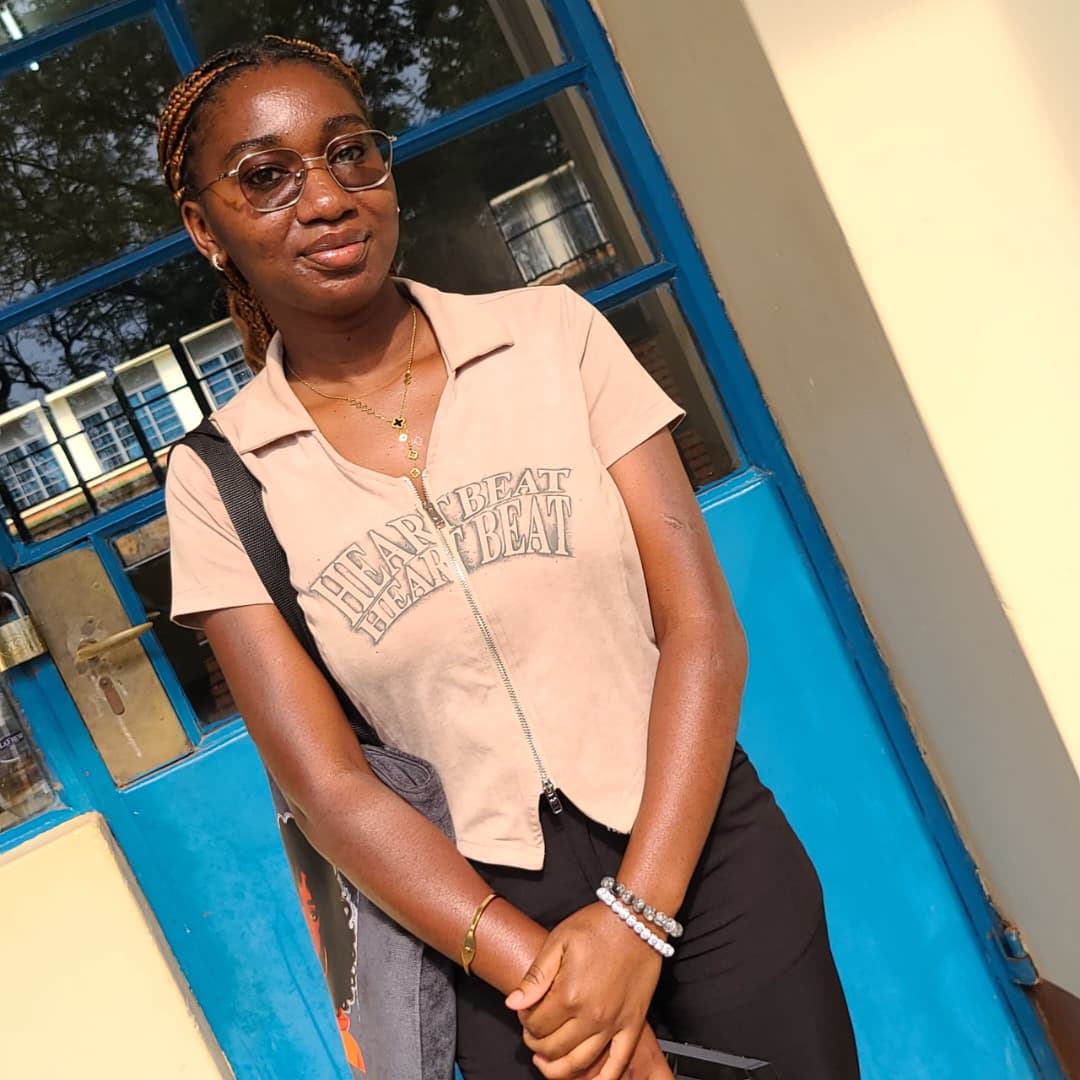
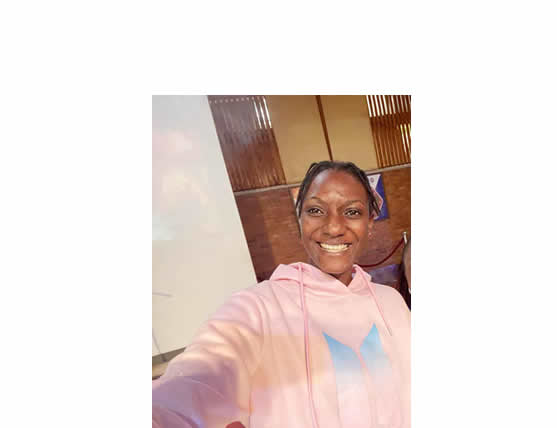
Favour Maombi Vera, an international student at UCU
On her Curriculum Vitae (CV), she writes: “I am passionate about media, story-telling and the power of bringing people together and to inspire change.”
But behind the voice that moves from soft-spoken when within earshot of others she does not know well to forceful when in a trusted, one-on-one conversation, the real story of this third-year UCU student evolves. She shares the pain of ethnic discrimination, anxiety about money for food and fees for exam access and fear regarding physical violence and property loss related to a political conflict she doesn’t quite understand.
“One of my lecturers asked about the pimples on my face,” Favour shared, while touching some only slightly noticeable acne. “I appreciated the concern but didn’t want to burden her with what is going on in my head.”
Likewise, she doesn’t want to encumber her UCU friends who “have problems of their own.” As an international student, Favour’s fees are higher than those for Ugandans, but she knows that other classmates still struggle financially. She is grateful beyond words when classmates notice that she is hungry and buy her food.
Ethnic discrimination is tied to her time when she attended South Africa’s Goeie Hoop Primary School with students having white or lighter brown skin.
“Some would hold their noses when seeing me,” Favour said. “Others would tell me to do a better job washing my skin, associating my black color with dirtiness.”
Today, Favour feels safe, but memories of the terror in Goma, DRC, remind her of a time when she and her family were less so.
“I’m not a politician,” she said. “What I know is that homes are being looted, people are being abused and killed, and one conflict between the DRC and Rwanda is about the minerals.”
Beyond the current health crisis of the Ebola virus, the DRC’s wealth of gold and coltan, a mineral used in smartphones and defense systems, is often at the center of discussion about the economic destabilization in the eastern DRC. Goma, located on the northern shores of Lake Kivu and at the border of Rwanda, is especially vulnerable to fighting with its reminder of Hutu camps once there after the1994 Rwandan genocide.
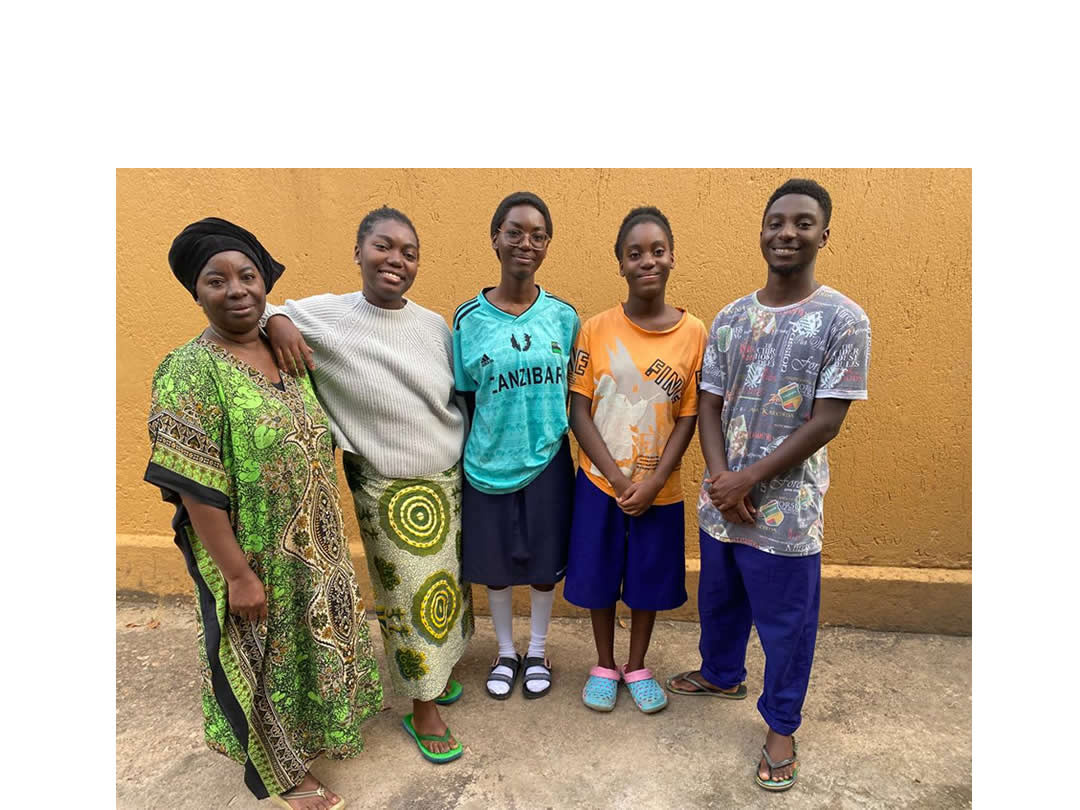
For Favour’s mother, Julie Nandengo Mugeruza, a homemaker; and her father, Bidaha Makoti Maombi, an electrician and pastor, the DRC is home. Because of that and despite “my umbilical cord buried in Mombasa (Kenya),” it is also considered home by Favour, she said. They wished to remain, but even going outside the family home in daylight has been dangerous.
“My father did his best to shield us from the blood and bodies along the road,” Favour said. “A prison outbreak made things worse. At times, we all slept in the same room to see each other.”
The latest and likely the last exodus from the DRC for Favour and her family happened in mid-2025. Favour left UCU during the last part of a JMC non-study semester to join her mother, father and three of four siblings (one brother was already in Uganda) for this departure from Goma.
They took one bag each to board a bus to Uganda. Left behind was furniture, a car and belongings not considered necessities.
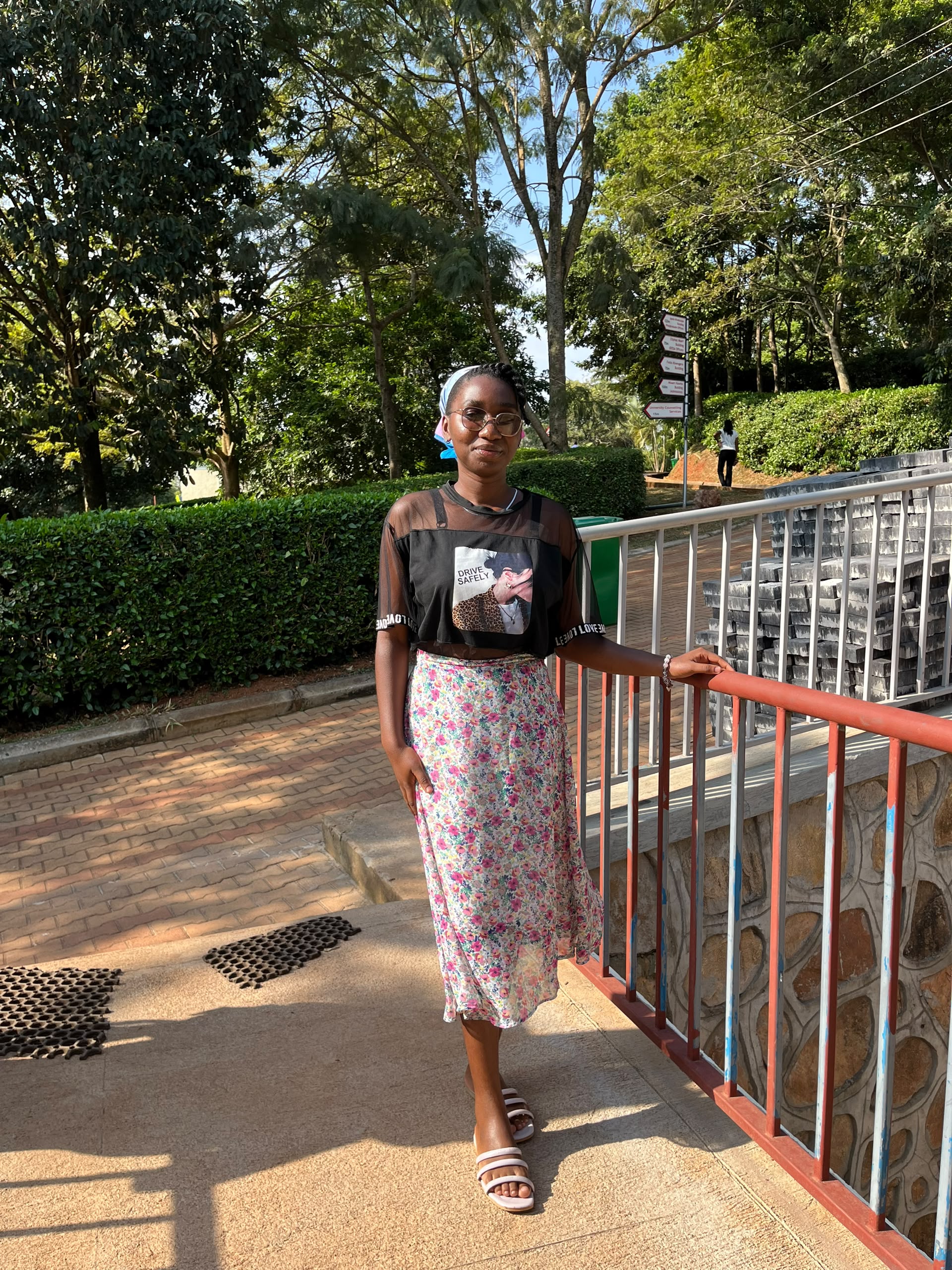
Favour Maombi Vera on the UCU-Mukono campus
“I remember thinking about a Bluetooth speaker I bought to brag with a sister, and it was left for thieves,” Favour said, smiling. “Things like that don’t seem so important now.”
The family traveled to Nakivale Camp in Uganda’s southwestern Isingiro District, where Aug. 26-29, 2025, they applied for refugee status. The settlement spans 71 square miles and hosts approximately 286,000 refugees from the DRC, Burundi, Somalia, Ethiopia and Rwanda.
“We are in the system, but don’t yet have our IDs,” Favour said on June 30, 2026.
At that and while wistful about better times in Goma, she is hopeful for her brother, who is taking an economic-necessary gap year from his UCU electrical engineering studies; for her father to get a stable church while doing other jobs to support the family; for her sister with hospitality management credentials and who once had a good job with a Goma hotel; and for herself as she visualizes doing investigative reporting someday.
“My parents are peacekeepers and problem-solvers,” Favour said. “They are role models for honesty and hard work and survival.”
Favour, who once dreamed of being an architect, is optimistic about a career in journalism. She senses her hardships might make her better in that profession.
These days, while sometimes struggling to focus in class when her stomach is empty, she is driven not to disappoint those who believe in her. Listening to music, watching basketball games and drawing cartoon characters are an escape.
She laughs when sharing how she struggles to learn a certain word with so many languages (Swahili, Luganda, French, English, among them) swirling around her brain. She also laughs when learning about Uganda consumption of snacks like fried grasshoppers while knowing about such DRC edible insects as crunchy, roasted caterpillars.
When asked how she can smile and laugh, Favour replies: “I have cried, but I choose not to spend time in that.”
Her faith in God sustains her.
“I talk to Him a lot,” she said. “He has always been there for me, understanding me better than anybody. He will not fail me.”
++++
To support UCU programs, students, activities and services, go to www.ugandapartners.org and click on the “donate” button, or contact UCU Partners Executive Director, Mark Bartels, at m.t.bartels@ugandapartners.org.
Also, follow us on X (formerly Twitter), Instagram and Facebook.
Discover more from Uganda Partners
Subscribe to get the latest posts sent to your email.