By Michael Ainomugisha
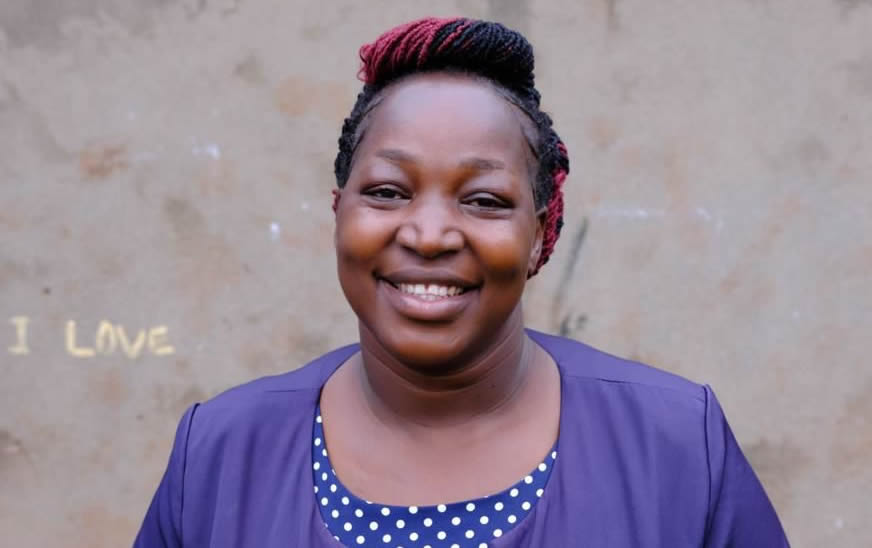
Olivia Akutui’s workday often starts before she even reaches her office. She gets engaged in conversations with children who are carrying the weight of a difficult past and with families attempting to rebuild trust. In between, sometimes she is faced with making decisions on how to best serve people who have long been overlooked in society. For her, social work is more of a responsibility than a job.
“I have always loved working with the community. Even before I joined university, that desire was already in me,” says Akutui, who is pursuing a master’s degree at Uganda Christian University (UCU).
Currently, she does social work with Peace for Paul Foundation, where she serves as the Programs Director. Akutui manages daily operations, supports staff and families and coordinates programs for the organization. She is a key figure in providing care, stability and education to children in need.
According to the organization website, the story of Peace for Paul Foundation began in 2008 with children who, without the opportunity to be in school, were searching the streets for food and scrap metal for survival. Among those children was a boy named Paul “whose simple act of gratitude inspired what would become the Peace for Paul Foundation,” the website notes.
The Peace for Paul Foundation provides education, basic necessities and a safe shelter, as well as Government of Uganda-approved children’s homes.
“We work with children from different parts of the country. Some live with us in the approved home because it is not safe for them to stay with their families,” Akutui says.
Many of the children she serves were once on the streets. “To see children who were on the streets now thriving is one of the best things that has happened to me,” she says. “Seeing them happy, chasing after their goals, socializing normally and having dreams means a lot.”
Years of working closely with vulnerable children have made Akutui understand why many end up on the streets. She believes the issue often begins within families.
“There is no child without an origin, and parents contribute a lot through neglect, poor parenting, harassment and failure to take children to school,” she says.
Akutui believes stronger community and government involvement is essential and that parents must understand their responsibilities, which include guiding the children.
Her experience in the field, for instance when she noticed that many of the difficulties she faced required psychological and emotional support, inspired her to return to UCU for postgraduate study. Her first degree, Bachelor of Development Studies, was also earned from UCU.
Although she initially considered a Master of Public Administration and Management, she soon realized it was not aligned with her calling. Thus she applied for a Master of Arts in Counseling Psychology, a course she says has added so much value to her. The course, which Akutui is in the final stages of completing, trains professionals to handle mental health challenges.
“Through the course, I got to understand how families contribute to what children go through,” she says, adding that she is now able to support cases involving childhood trauma, addiction, HIV and family conflict.
At UCU, Akutui says her learning extended beyond lecture rooms, with internships forming a critical bridge between theory and practice, especially during her undergraduate studies.
“Before I graduated, I did two internships, and these helped me understand how to work with the community in a practical way,” she says.
That grounding prepared her for professional life and shaped how she approaches community engagement today. Akutui credits her training at UCU for equipping her with the discipline, professionalism and a strong sense of responsibility.
But how does the mother of four and a wife balance studies, work and family? Her answer is in two words: intentional planning.
“It’s about what you do, at what time, where and when,” she says.
She deliberately creates the time for her family, especially in the evenings and the weekends “so that they do not fall victim to what I am trying to fix in society.”
++++++++++++++++++++++++++++++++++++++++++++++++++++++
To support Uganda Christian University programs, students, activities and services, go to www.ugandapartners.org and click on the “donate” button, or contact UCU Partners Executive Director, Mark Bartels, at m.t.bartels@ugandapartners.org.
Discover more from Uganda Partners
Subscribe to get the latest posts sent to your email.