
By Patty Huston-Holm
In a world saturated with chatter — from Artificial Intelligence, smartphones and endless screens — quiet, face-to-face listening is becoming a lost art. Finding someone who practices it is increasingly rare.
Dorothy Tushemereirwe is such a person.
From the patio of a Uganda Christian University (UCU)-Mukono apartment – one located in the dust-laden area officially called Tech Park and informally whispered as “Afghanistan” – she listens. Within the cacophony of crying babies, rumbling vehicles and amplified food vendor voices outside the campus gates, she weighs questions carefully. The first enquiry about the length and meaning of her surname is common. At that, and with a slight grin, she patiently responds as she probably has multiple times before.
“It means happiness in the Rukiga language of Kabale,” she said. “I try to live up to it.”
In addition to “Tushemereirwe” and “Dorothy,” some family and friends in her native Kirwa of Ruhita village in southwestern Uganda call her “Nsheme,” a name she’s been told came from her father who fancied it because it was similar to that of a favorite niece.
Most UCU students and staff don’t know Tushemereirwe’s backstory. Until now.
As a listener, she would rather write about than talk about herself. In a 37-page, 2025, draft with a working title, “Oh, But the Grace of God,” she shares slices of her life that reach beyond her 2026 Curriculum Vitae (CV) and title of “fundraising consultant.” Portions of her nearly 22,000 typed words about her life mirror those of many UCU students with themes of poverty, loss of life, ridicule and adjusted dreams.
In her birthplace near the Rwandan border, Tushemereirwe was born on a Ugandan banana plantation, the second of three siblings. She recalled good times of neighborhood gatherings to enjoy tilapia and Nile Perch her father brought home from his work as a safari driver and the not-so-good when his alcohol consumption and domestic violence ensued.
At some point before she turned age eight, Tushemereirwe’s father was injured; at age 49, he died following a safari vehicle accident, leaving five wives and many children. One wife, Dorothy’s then 27-year-old mother, was unable to support three daughters – ages 4, 3 and six months – on her meager earnings from farming.
“Our house looked radiant on the outside with a cemented veranda and iron sheets but deep inside lay a dark reality,” she wrote. “The floor was made of mud…there were holes in the walls and roof.”
Tushemereirwe recalled a home where rats were plentiful and leaves were used as toilet paper. Her childhood was one with no shoes on her feet, no sweater on a cold morning and a stomach rarely filled. Except her mom, adults vented their frustrations on boys and girls like her with insults, calling them Rukiga words translating to English such as “dirty,” “dogs” and worse.

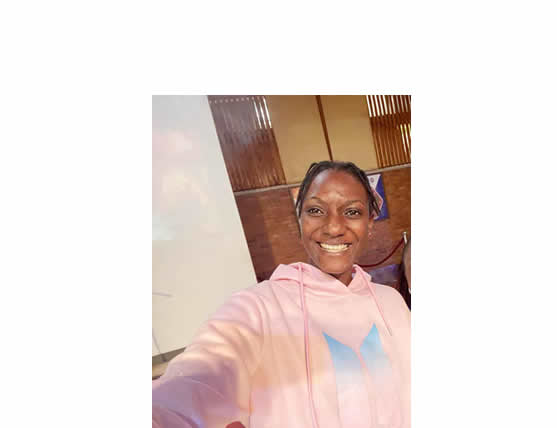
Dorothy Tushemereirwe, UCU fundraising consultant
“These statements make children hate themselves and their parents as well,” she said. “They grow up mentally traumatized.”
Subsequently, Tushemereirwe and an older sister attended “free” church-owned, primary schools and lived in an orphanage for children for four years.
“People were critical of my mom for putting us in an orphanage,” Tushemereirwe said of a four-year period up to age 12. “But the hand of God was upon her; she let God take the wheel…getting our education while other children (in homes with one parent or two) got married early.”
Tushemereirwe completed O-Level and A-Level learning, respectively, at Bishop Kivengere Girls’ School and Hornby High School, all Church of Uganda-founded institutions renowned for championing girl-child education. Originating in the British educational system, “O” or “Ordinary” refers to basic knowledge competency before advancement to more specialized, pre-university courses; while “A” or “Advanced” is subject-specific qualification for such higher education courses.
When living at home, education was sandwiched between morning work in a garden and evening chores to fetch water and firewood for a house with no electricity or indoor plumbing. At school, Tushemereirwe found joy from singing in the choir. She dreaded mathematics as she was repeatedly caned for what she didn’t know.
With a belief in life-long learning, 44-year-old Tushemereirwe is working on a degree called Master of Transformational Development from Eastern College, a non-denominational Christian private higher education and vocational education provider in Melbourne, Australia. She holds a diploma in Human Resource Management from Uganda Management Institute and a Bachelor of Environment Management degree from Makerere University.
“I originally wanted to be a lawyer or journalist to use those skills to defend the weak,” she said. “But those studies were too expensive.”
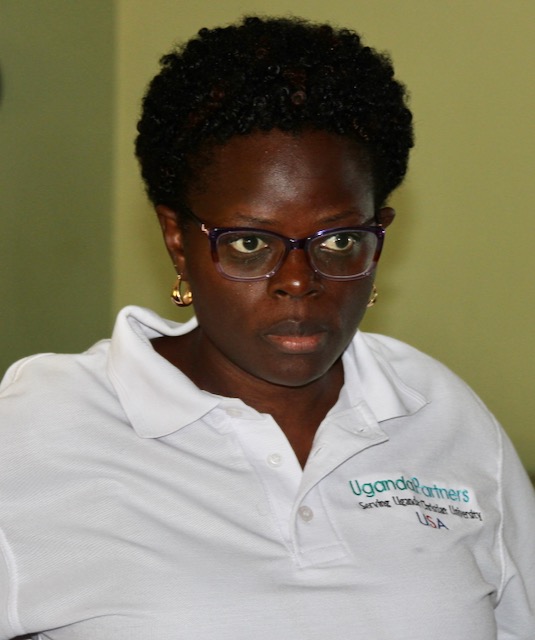
Dorothy Tushemereirwe, Uganda Partners fundraising consultant
Her previous jobs included positions with the Uganda Ministry of Education and Sports and Research Triangle Institute International. She first dipped her toes into fundraising six years ago when raising money for a car for her church pastor. She not only heard the story of how his vehicle broke down when visiting a couple in need in the middle of the night, but felt it.
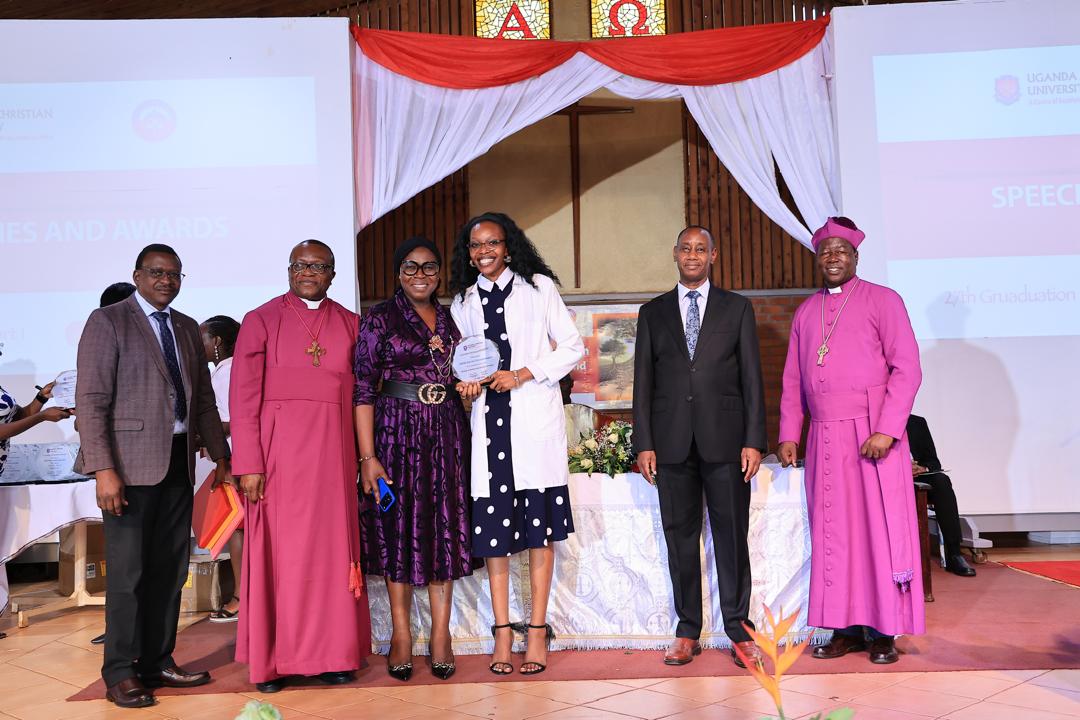
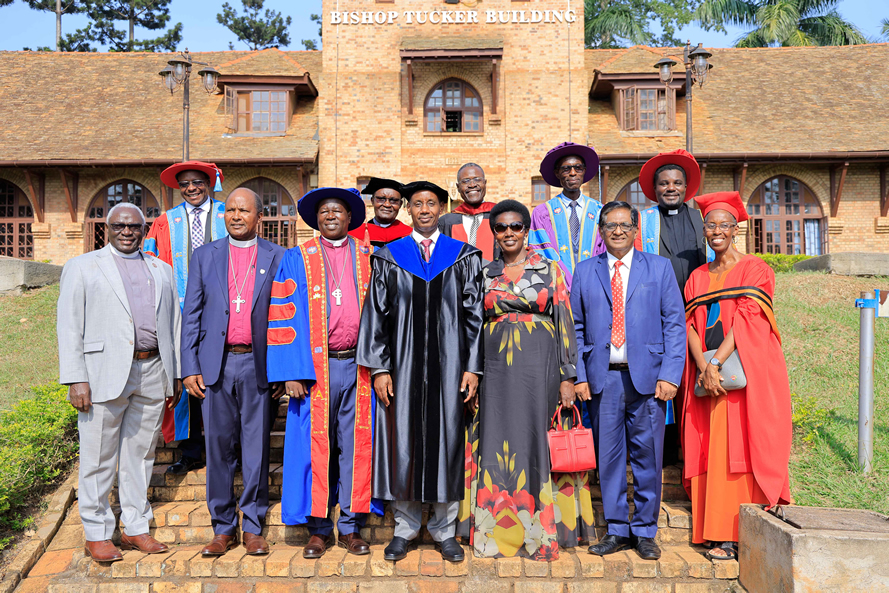
UCU Vice Chancellor, Prof. Aaron Mushengyezi, who attended that church, brought Tushemereirwe to UCU to see if she could do the same in another place. She could and did.
Tushemereirwe’s schedule is intense. As with most self-supporting Ugandans, she works more than one job. Since 2022, two of those jobs – one at the campus and one through the USA-based non-profit called Uganda Partners – have involved raising funds to help the university and its students.
Among her money-making strategies are a “coffee and paint” activity whereby participants are served cups of coffee while creating a piece of artwork to take away; and a Just10k Campaign, a grassroots initiative that encourages students, alumni and well-wishers to donate UGX10,000 (roughly $2.70) to help struggling students pay their tuition and graduate. The highly successful campaign reenforces how everybody giving a little adds up to a lot. In one previous two years of the “Just 10K” plea, more than UGX200 million ($54,000) was raised to support more than 100 students.
“How many students overall now?” she asked rhetorically. “Hundreds maybe. Most are not full scholarships, but ‘top-ups’ to help.”
Tushemereirwe, unmarried, humbly surmised that men and women might more readily disclose financial, social and other problems to a person they might never see again than to an acquaintance present in other aspects of life. When she is the vessel, advice isn’t always offered but prayer – silently or out loud – always is.
“People open up to me and share even if I don’t ask,” she said.
One young woman she remembered distinctly sharing her anger and despair about being pregnant by forced sexual relations.
“She said she didn’t want the baby and would hate it,” Tushemereirwe recalled. “I encouraged her to love the child who had nothing to do with how it was conceived.”
Often, Tushemereirwe is driven to Ephesians 2:8-9. This biblical scripture connects on many levels as it points to salvation as an unearned gift from God, received entirely through faith in Jesus Christ, rather than through personal effort, acts or good deeds. At that, noticing – and listening to – hurting people is such a deed.
Sometimes, the weight of hearing seems a burden too hard to bear, especially if accompanied by observing.
Nearly two weeks after the Tech Park interview, Tushemereirwe sent a WhatsApp text and a photo related to 900 teenage girls she spoke to before. Among her words to them was a question: How many of you don’t have a father?
She noticed in particular “one girl with her hand up as tears fell” and how Tushemereirwe’s “heart moved for her.”
According to Tushemereirwe, this is one of many examples of people who “don’t ask for anything…just want someone to listen.”
Sometimes, in a seldom-quiet world, listening is enough.
++++
To support UCU programs, students, activities and services, go to www.ugandapartners.org and click on the “donate” button, or contact UCU Partners Executive Director, Mark Bartels, at m.t.bartels@ugandapartners.org.
Also, follow us on X (formerly Twitter), Instagram and Facebook.
Discover more from Uganda Partners
Subscribe to get the latest posts sent to your email.