By Prisca Adaeze Nenger
Part Two Continued
In the first part of the Daniels’ story, we reflected on Stephen and Ayebatogu’s time at Uganda Christian University (UCU), including their experiences, relationships, and opportunities that shaped their journey as students, as well as the memories that made their university years meaningful. Their story offered a glimpse into how UCU became more than a place of study – it became a community that helped form their values, strengthen their faith, and prepare them for the future.
In this second part, the Daniels reflect on life after UCU and the lessons they have carried with them beyond the university. They share how their UCU experience continues to influence their personal lives, professional paths, service, leadership, and sense of purpose. Let’s continue the ride on their journey from UCU as undergraduates in Uganda, to their home country, Nigeria, as graduates, building their careers and a home together!
Returning to Nigeria
Did you always plan to return to Nigeria after your studies? Why or why not?
Ayebatogu: Yes, I always planned to return to Nigeria after my studies. The legal profession is dynamic and jurisdiction-specific, and I could not practice as a lawyer unless I was called to the Nigerian Bar. That meant returning home to attend the Nigerian Law School, pass the bar examinations, and be called to the Nigerian Bar as a licensed barrister and solicitor. Beyond that requirement, I had a strong desire to build my professional career in Nigeria, seeing it as an opportunity to contribute meaningfully to nation-building and to apply my training in the service of my own society.
Stephen: Yes, returning to Nigeria was always the plan. I never saw my time in Uganda as an exit route, but as a season of preparation and strategic opportunity to retreat. I remember making it to the final stages of the Mandela Washington Fellowship selection process in Uganda, and one of the decisive questions was whether I intended to return to Nigeria afterward. I answered “yes” without hesitation, even though I knew that response might work against me. It eventually did.
But for me, that answer was never up for negotiation. I have always believed that my work, calling, and future in public service must be rooted in Nigeria. I knew that whatever God was preparing me for, including a future in leadership and politics, had to begin at home before it could have any global relevance. So returning was never a fallback option, and there were no plans to “japa.” It was a deliberate choice to build where I am from and contribute to shaping the country I believe in as a springboard to my African dream.
What was the transition like returning home after years in Uganda?
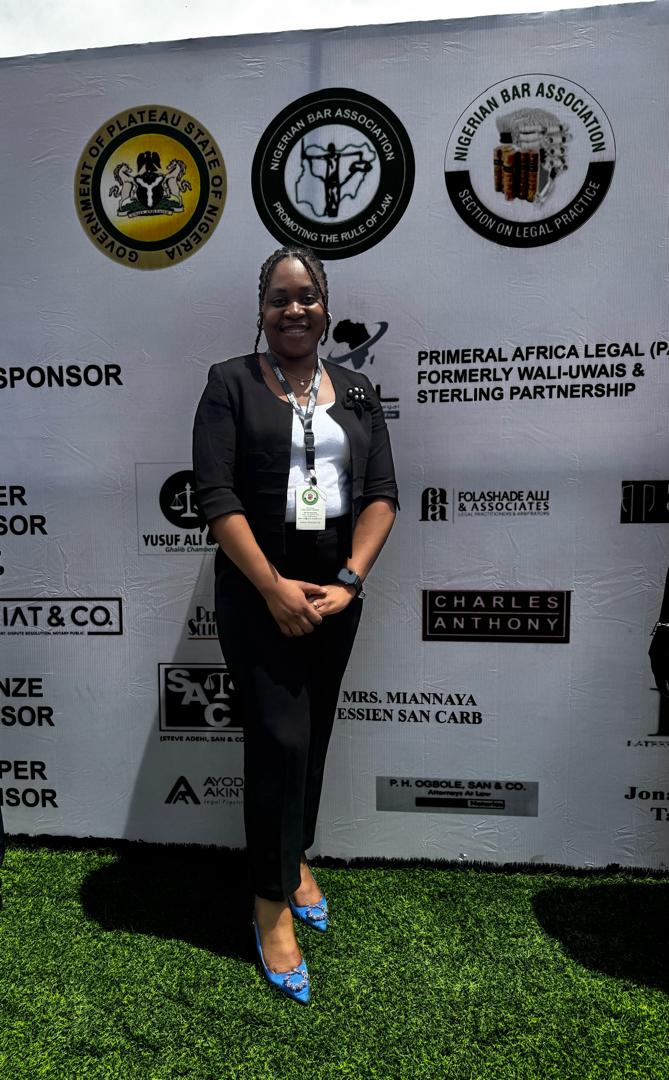
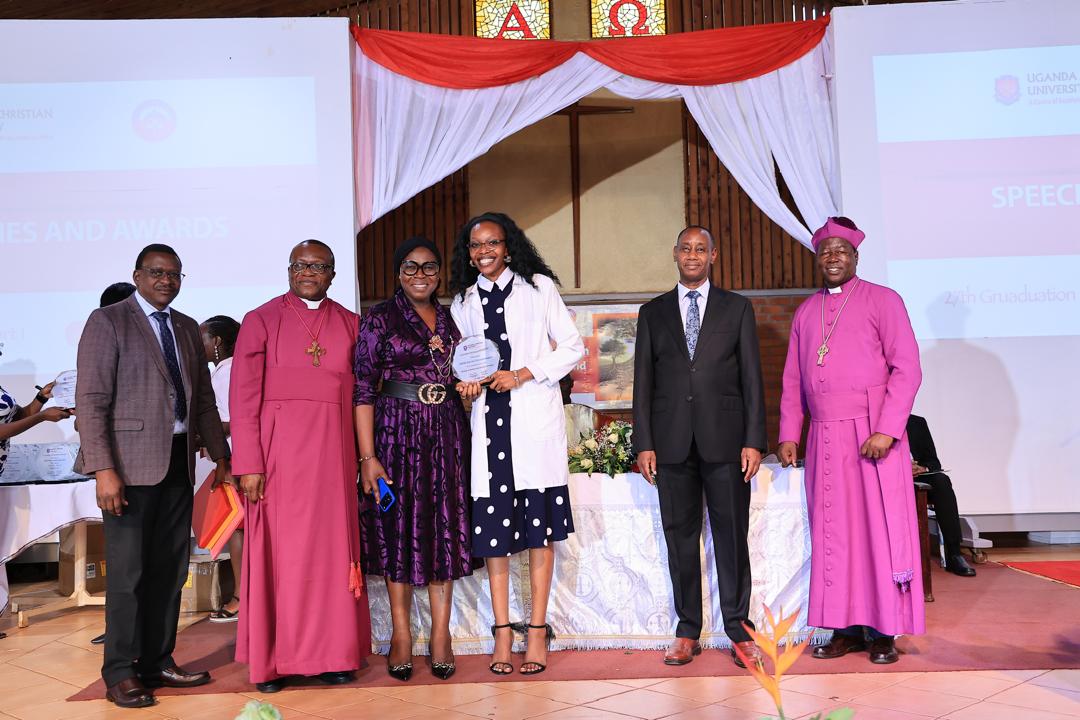
Ayebatogu Daniel at the Nigerian Bar Association (NBA) event in Plateau State
The Daniels: The transition back home was smooth and largely seamless. Academically, the then Vice Chancellor, Rev. Canon Dr. John Senyonyi, together with the then Dean of the Faculty of Law at UCU – Dr. Anthony C. K. Kakooza, ensured that all the documentation and academic requirements needed for a smooth entry into the Nigerian Law School were made available promptly and without delay. Family-wise, we had remained closely connected to home throughout our time in Uganda, with regular communication and visits during holidays, so reuniting was more joyful than challenging. Culturally, transitioning was never an issue – you can’t take the Nigerian out of a Nigerian. Overall, it didn’t feel like starting over, but rather like continuing from where we left off, carrying forward the growth and experiences we had gained.
Academic and Professional Growth
Stephen, how did your degrees in Development Studies (2016) and Research & Public Policy (2019), both from UCU, prepare you for your current role as the Acting Head of the Think Tank Operations Department at the Nigerian Economic Summit Group (NESG)?
Both of my degrees provided a strong foundation for how I understand problems, systems, and solutions, which have been central to my work at the Nigerian Economic Summit Group. My Development Studies degree helped me see development not as a theory-driven exercise, but as a lived reality shaped by institutions, incentives, human behavior, and history. It trained me to look beyond symptoms and ask deeper questions about why policies succeed or fail, particularly in African contexts.
The Research & Public Policy degree further strengthened this foundation by equipping me with practical tools for evidence-based analysis. I learned how to design research, interpret data, translate findings into policy-relevant insights, and communicate complex issues in ways that decision-makers can act on. That training has been especially valuable at NESG, where the work sits at the intersection of research, private-sector engagement, and public policy influence.
Together, these degrees prepared me to operate comfortably across multiple spaces – engaging with government, private-sector leaders, development partners, and civil society – while remaining grounded in data, context, and impact. They shaped my ability to think strategically, write clearly, convene stakeholders effectively, and contribute meaningfully to policy processes aimed at Nigeria’s long-term development.
Ayebatogu, how did your Bachelor of Laws (2017) at UCU prepare you for law school in Nigeria and later for your current role as a Legal Officer at Federal Competition and Consumer Protection Commission (FCCPC)?
My Bachelor of Laws degree from UCU in 2017 provided a solid foundation upon which I could build, but it became clear upon my return to Nigeria that legal education and legal practice are distinctly different endeavors. While UCU equipped me with critical analytical skills, legal writing, and research methodology, the realities of practicing law in Nigeria required a significant reorientation.
Law school in Nigeria was fundamentally different from my LLB at UCU. It was rigorous and very demanding, essentially a process of relearning the law through the lens of Nigerian statutes, case law, and procedural frameworks. The shift from studying law in an East African context to mastering Nigerian law felt like starting anew. Law school proved to be an intense preparation for professional practice, and this divergence from my undergraduate experience made me realize that academic foundations and professional readiness are distinct competencies.
Regarding my current role at the FCCPC, I must be honest: it was not a position I had deliberately targeted. The opportunity came, and by God’s provision, I seized it. However, if there is a direct correlation between my academic background and my work in competition and consumer protection, it is my LLM studies in International Commercial Law. During my postgraduate program, I had the opportunity to study a bit of competition law, which provided the foundational basis upon which to build my understanding of competition policy, market conduct analysis, and consumer protection issues. That foundational knowledge has been invaluable as I have deepened my expertise through practical work at the FCCPC.
In essence, my journey has been one of building progressively from the foundational thinking skills at UCU, through the intensive professional grounding of law school in Nigeria, and culminating in the specialized foundation provided by my LLM, each stage preparing me for the next, with my current role at the FCCPC allowing me to apply and continuously expand upon that foundation.
What personal strengths or life lessons did you gain from your time at UCU?
Ayebatogu: It was truly transformative. Beyond the academic rigor, I gained personal strengths in discipline, perseverance, and time management, learning to balance multiple priorities effectively. Interacting and collaborating with people from different countries broadened my perspective, enhanced my cultural sensitivity, and strengthened my ability to communicate and work with diverse teams. Overall, UCU equipped me to approach life with resilience, integrity, and a heart ready to serve others.
Stephen: My time strengthened my discipline, sense of responsibility, and ability to work with people from different backgrounds. It taught me consistency, service, and the importance of community — lessons that continue to guide how I live and work.
Family Legacy
Ayebatogu, you gave a speech at the UCU Commissioning Service in 2018. What was the message, and what did that moment mean to you?
I may not recall every detail of the speech itself, but I clearly remember leaving everyone with the Book of Joshua 1:8 – “Keep this Book of the Law always on your lips; meditate on it day and night, so that you may be careful to do everything written in it. Then you will be prosperous and successful”. This Scripture captured what I deeply believed then, and still do, that true success is rooted in obedience, discipline, and aligning one’s life with God’s Word. That moment meant a great deal to me because it was an opportunity to publicly affirm that our academic achievements find their highest value when they are anchored in faith and lived out with purpose. Standing there, I saw it as a responsibility to point everyone not to my personal accomplishment, but to a life of excellence grounded in God.
If your daughter, ADAYA, someday expresses interest in studying at UCU, what would your advice be?
The Daniels: If Adaya were to express interest in studying at UCU, our advice would be for her to prayerfully and thoughtfully explore whether it aligns with her calling, values, and academic goals. We would encourage her to engage with the University, understand its culture and expectations, and consider how it would support both her intellectual growth and personal formation. Ultimately, we would support her in choosing the environment where she can thrive academically, grow in character, and be well prepared for the path God is leading her toward.
What kind of educational legacy do you hope to build for your family?
The Daniels: We hope to build an educational legacy for our family that values curiosity, integrity, and lifelong learning, where education is seen not just as a pathway to success, but as a tool for responsible leadership, service, and positive impact in society.
Reflections & Impact of UCU
In what ways did UCU shape your character, worldview, or spiritual life?
The Daniels: UCU shaped our character by grounding us in discipline, integrity, and a strong sense of responsibility, while also expanding our worldview to engage others with honor and respect. Spiritually, it deepened our walk with Christ by teaching us that faith is best expressed through how we live, not just what we say – where our lives, work, and relationships intentionally point others to Jesus Christ. That formation continues to guide how we make decisions, serve others, and live out my faith in practical, everyday ways.
What aspects of the UCU experience have remained with you, influencing your work, your marriage, or your approach to life?
Ayebatogu: What has stayed with me most from the UCU experience is how faith, discipline, and community were lived out in everyday ways. Faith shaped how I think, work, and make decisions; discipline taught me consistency, responsibility, and excellence; and community showed me the importance of accountability and doing life with others. Those lessons still influence how I approach my work, invest intentionally in my marriage, and navigate life with purpose.
Stephen: What has stayed with me most from the UCU experience is the value of intentional living. UCU taught me that faith, work, relationships, and leadership should not exist in separate compartments, but should reinforce one another. That understanding continues to shape how I approach my work, how I show up in my marriage, and how I make everyday decisions.
The emphasis on community and accountability has also remained with me. I learned the importance of building life with others, being responsible not just for personal success but for how one’s actions affect people around you. Those lessons influence how I lead, how I serve, and how I remain grounded in purpose rather than driven by convenience.
What would you say is the single greatest gift UCU gave you, individually, and as a couple?
Ayebatogu: The greatest gift UCU gave me was formation through lived example. While I was blessed to come from a Christian home with godly parents, it was a privilege to witness faith practiced daily through the hospitality of the then Vice Chancellor, Rev. Canon Dr. John Senyonyi, and his wife, Canon Dr. Mrs. Ruth Senyonyi. Staying in their home allowed me to see what a Christ-centered, Kingdom-minded marriage and family looks like in practice, not just in teaching. Even watching them, alongside their daughter Mrs. Sarah Nsubuga, navigate early parenthood as a young family gave me practical insight into Christian marriage, motherhood, and parenting, and many of the principles I witnessed there are the same ones I now implement in our own home as we seek to build our marriage and raise our children God’s way.
Stephen: My wife!
If you could summarize your UCU experience in one sentence, what would it be?
The Daniels: UCU experience has been a formative journey where academic rigor, Christian values, and personal growth converged to shape both our competence and character.
What memory from your time in Uganda best captures who you have become today?
The Daniels: Living in Uganda taught us to slow down, listen more, and serve with humility, and those everyday moments quietly shaped us into more grounded and resilient people.
The Daniels’ story shows a remarkable journey, from meeting as college students at UCU in Uganda, forming friendships based on faith, purpose, service, and leadership, to returning to Nigeria to build successful careers and a life together.
++++
To support UCU programs, students, activities and services, go to www.ugandapartners.org and click on the “donate” button, or contact UCU Partners Executive Director, Mark Bartels, at m.t.bartels@ugandapartners.org.
Also, follow us on X (formerly Twitter), Instagram and Facebook.
Discover more from Uganda Partners
Subscribe to get the latest posts sent to your email.